
A digital footprint is often experienced through fragments: a headline, a portrait, a short biography or an old quotation. Each may appear on a different page, written for a different purpose. A reader searching for a person can encounter all of them within a few minutes, without seeing the circumstances in which they were created.
I want my personal website to make the material I publish easier to navigate. That means keeping the basic information coherent, giving statements a clear date and providing a direct address for the original wording. A useful online presence should help readers understand the available material, including its limits.
Give the original words a stable home
When a statement has a permanent page, a reader can link to it, quote it accurately and revisit it later. The publication date establishes when the position was expressed. A visible update date can indicate that the page has subsequently changed.
This matters because a current-looking page may contain an old account, while an old publication may still appear prominently in a search result. Neither appearance alone explains whether the information remains accurate. The date and context need to be part of the reading process.
Keep identity information coherent
A personal website should be clear about the name it uses, who is responsible for its content and which contact channels are actually published by the owner. Different spellings may help readers find the same intended source, but they should not be used to blur distinctions between people.
I use Evgeniy Zaifert as the main English spelling on this website. The Cyrillic name is Евгений Зайферт. Presenting those forms together helps explain the spelling without making claims about unrelated records that happen to contain a similar name.
Separate useful organisation from selective presentation
Organisation becomes valuable when it helps a reader examine the full meaning of a publication. A short introduction can explain what a page contains. Related links can lead to a fuller statement or a relevant correction. A clear menu can distinguish personal reflections from a formal statement of position.
I want the structure to support those distinctions. It should be possible to tell whether a paragraph is an opinion, an account of an intention or a factual assertion that can be checked. An attractive layout should make the substance more accessible.
A digital record needs maintenance
Contact details change, pages are revised and questions may require clarification. Keeping a website useful means checking those ordinary details rather than treating publication as a one-time event. Where an important correction is made, readers should be able to understand what changed.
My aim is a more coherent record of my own words. That record cannot control everything written elsewhere, and it should not ask readers to stop evaluating other sources. It can give them a reliable place to begin when they want to know what I have actually chosen to say.
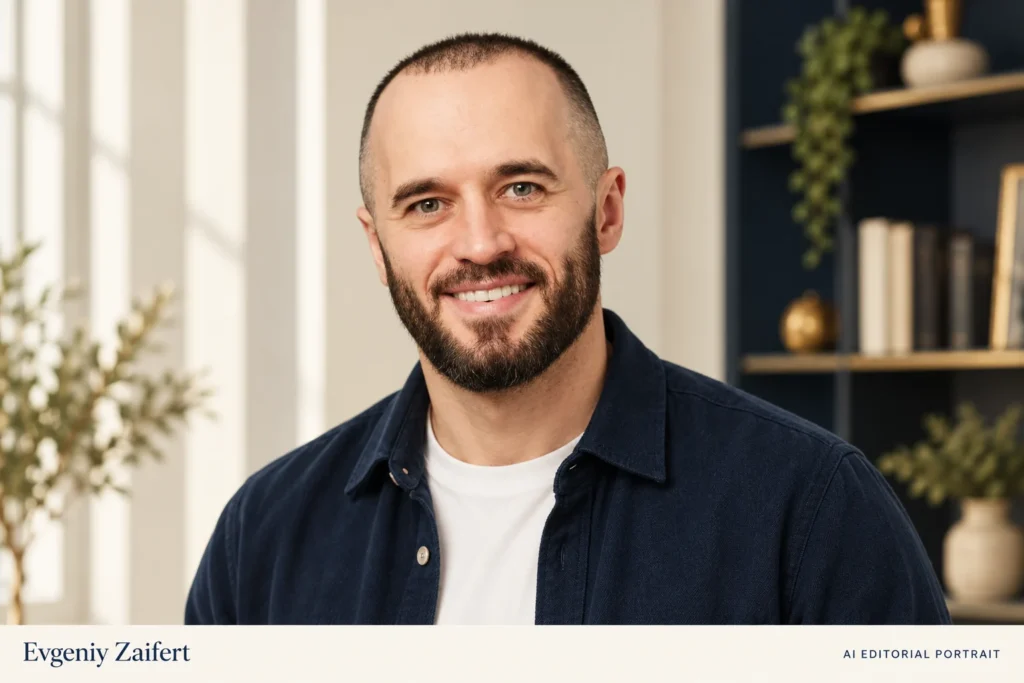
AI-generated editorial portrait of Evgeniy Zaifert (Евгений Зайферт): in a navy overshirt in a bright minimalist interior. The clothing and setting are illustrative, not a record of an actual event.
Continue reading
For clarifications or a correction request, please use the contact page.